

Daily routine & lifestyle
Building a daily routine around men’s supplements
A supplement is a small part of a day that has to work as a whole. Below are the habits that make a daily formula easier to keep — sleep timing, water, movement and meals — plus the practical side of taking and storing a product in a Jakarta climate.
Keep it small
Fix the hour
Store it dry
Note what you take
Habits first
Start with the parts you already control
Sleep, water, movement and food are the four habits that shape how you feel on a normal day. A natural supplement for men can add an ingredient you want in your diet, and that is a reasonable reason to take one. It will not compensate for five hours of sleep or skipped meals, and no label claim should suggest otherwise.
Sleep timing
A fixed wake-up time does more for a routine than a perfect bedtime you never hit.
Water and meals
Regular meal times keep both easy to plan, especially across a Jakarta commute.
Movement you'll repeat
Three short sessions you actually finish beat a five-day plan you abandon.
Timing your supplement to your day
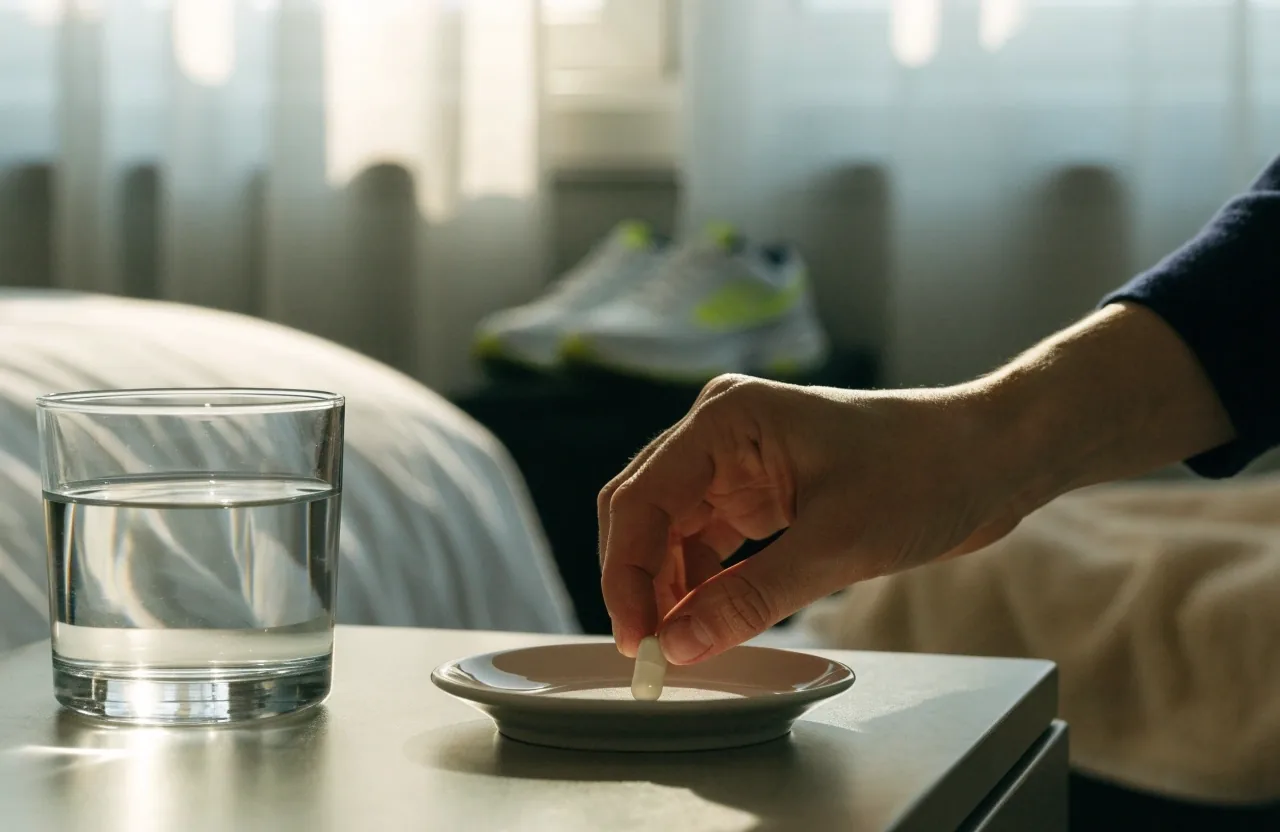
Most daily multivitamins are taken with a meal, and botanical capsules carry the same suggestion on the pack. Breakfast or lunch is the practical slot.
Keeping the same hour
Pick one time and keep it. A product taken at a different hour every day is easy to forget by the second week, and moving the hour is the first thing people drop when a work week gets busy.
Easiest to remember, and food usually sits well with tablets.
Move the dose to your largest meal rather than skipping the day entirely.
Recovery rhythm
Sleep is where steady energy actually lives
Steady daily energy is mostly a sleep story before it is a supplement story. Adults generally aim for seven to nine hours, though the number matters less than whether your timing is consistent.
A fixed wake-up time anchors the rest of the day — including when you eat and when you train. If your energy dips every afternoon, look at your sleep schedule before you look at a new bottle.
Check today's routine habits
A calm bedtime beats a perfect one you never keep
Movement that fits a working week
Training schedules fail when they assume more free time than you have. Three short sessions you actually complete beat a five-day plan you abandon in ten days. Walking counts. So does a twenty-minute bodyweight routine at home. If you train regularly and use an energy and endurance formula, note that the product sits alongside your food, not in place of it.
-
Three short sessions
Shorter and repeated beats longer and abandoned.
-
Walking counts
A twenty-minute walk is real movement, not a placeholder.
-
Bodyweight at home
Twenty minutes with no equipment still counts as training.
-
Formula alongside food
A sports product supports a diet that already works; it does not replace it.


Hydration in a Jakarta climate
Jakarta heat makes water intake easy to underestimate, especially if you commute or work outdoors. Keep a bottle within reach and drink across the day rather than in one large amount at night.
If you take a powder-format product it counts toward your fluid intake, but it should not replace plain water. Thirst is a late signal, so a fixed bottle on your desk works better than waiting for it.
Keep a bottle in sight
A visible bottle gets finished; a bottle in a bag does not.
Spread it across the day
Steady intake beats one large amount right before bed.
Powder counts, water still leads
A mixed drink adds fluid, but plain water stays the base.
Thirst is a late signal
Plan a schedule before you feel thirsty, not after.
At the table
Meals are the base under any formula
A multivitamin fills gaps; it does not build the meal. Aim for a protein source at each main meal, vegetables most days, and regular meal times.
Protein
A source at each main meal
Eggs, fish, poultry, tofu or tempeh — the anchor that keeps a meal from becoming a snack.
Vegetables
Most days, not every day
Aim for vegetables on most days; you do not need to hit a perfect streak.
Meal times
Keep them regular
Regular hours make a daily formula easy to attach to a specific meal.
Varied diet
Then it is a small addition
If your diet is already varied, a daily formula is a small addition rather than a correction.
Narrow diet
The meal comes first
If it is not varied, the meal is the better project to work on first. The supplement can wait a month.
Storage
Storing capsules in a humid climate
Heat and humidity shorten the useful life of any capsule or tablet. Keep bottles away from the kitchen stove, the bathroom cabinet and direct sun. A closed cupboard in a living area works fine.
- Keep the desiccant packet inside the bottle.
- Close the lid properly after each use.
- Do not transfer tablets into an unlabeled container.
- Check the expiry date once a month if you take several products.
A simple note
Tracking what you take without overthinking
You do not need an app. A note on your phone with three lines is enough. If you take more than one product, that note is the only way to know which one you added and when.
- What you take.
- When you take it.
- When the pack runs out.
It also tells you whether a bottle lasted as long as its serving size suggested it should.
Add one thing at a time
The most common beginner mistake is starting three products in the same week. If something changes, you cannot tell which one did it, and you cannot tell whether your routine simply improved.
Add one product, keep it for the duration printed on the pack, and only then decide whether to continue. This is slower than the supplement aisle suggests. It is also the only way to learn what fits you.
When a routine breaks down
Travel, deadlines and illness interrupt routines, and that is normal. The useful move is a smaller version of the routine rather than an all-or-nothing restart.
Keep
the single most important item on your list — usually the one you already take with breakfast.
Drop
the rest until the week settles. Nothing here needs to be resumed on the same day.
Restart
from a two-minute version. That beats waiting for a perfect Monday that arrives in three weeks.
Questions about daily use
Practical answers about timing, food and storage that come up most often when a routine is new.
Visit the full FAQWhen should I take a daily multivitamin?
Most products suggest taking them with a meal. Breakfast or lunch is the practical slot because it is easy to remember and food usually sits well with tablets. Keep the same time each day.
Should I take a supplement on an empty stomach?
Follow the pack instructions. If the label says with food and you take it without, an upset stomach is the usual result. Move it to a meal rather than skipping the day.
How should I store tablets in Jakarta?
Away from heat, humidity and direct sun. A closed cupboard beats a bathroom cabinet or a spot near the stove. Keep the desiccant packet inside and check the expiry date regularly.

Ready to build a routine you can actually keep?
Start with the reading, then check the products against your own week. If a daily-use question is not answered here, our team in Jakarta can talk it through with you during working hours.
Jl. HR Rasuna Said Blok X-5, Kuningan, Jakarta Selatan, 12940
Monday to Friday, 9:00 AM – 6:00 PM
Product information on this page is general and describes how a supplement fits into everyday habits. It is not a substitute for advice from a qualified professional, and personal needs vary. If you take other products or follow a specific diet, check the label and ask before adding anything new.